The Noodle Barrier: How to Master the Ramen Ticket Machine & Slurp Like a Pro
Introduction
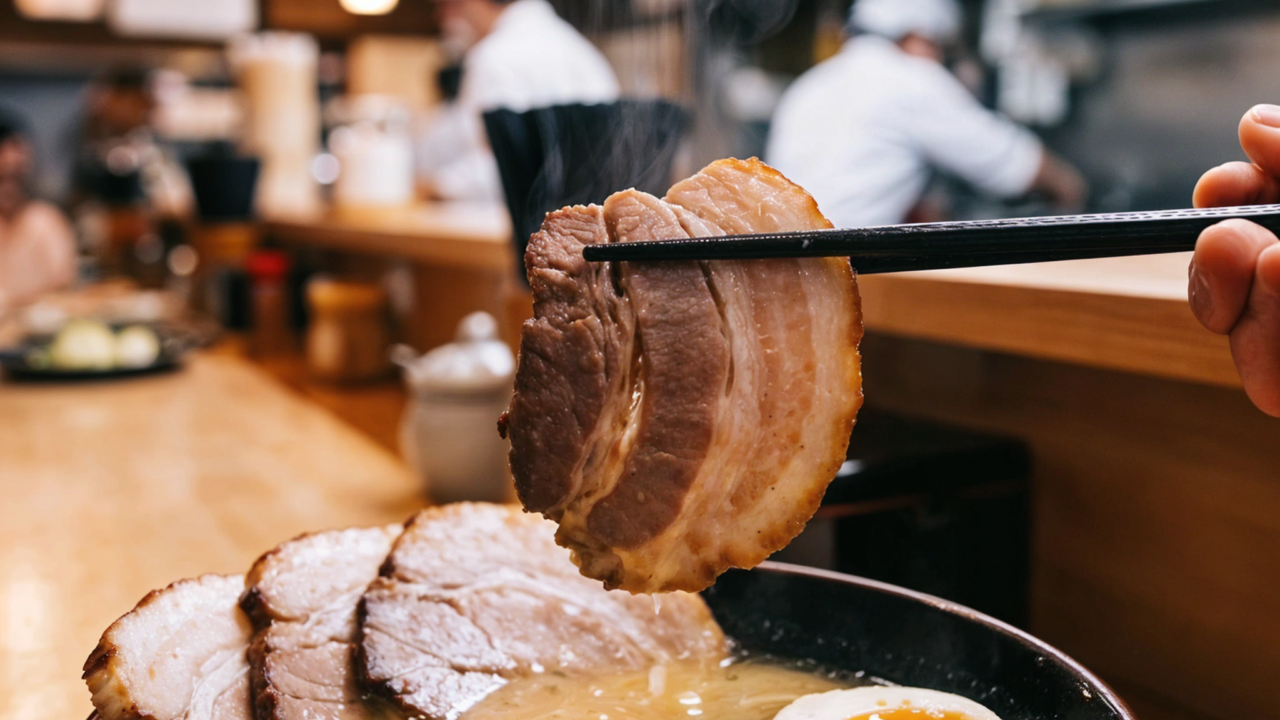
To Japanese people, Ramen is not just a quick lunch. It is an obsession. It is a religion. There are thousands of shops across the country, each with its own secret broth recipe—Tonkotsu (Pork bone), Shoyu (Soy sauce), Miso, and Shio (Salt).
But for many visitors, walking into an authentic Ramen shop can be terrifying. There is often a long line of silent people. The chefs are shouting. And blocking the entrance is a confusing, button-filled robot: The Ticket Machine.
Don’t let this metal box stop you. In this guide, I will teach you how to hack the menu, why you must make noise while eating, and how to respect the sacred counter.
Chapter 1: Defeating the Machine (The “Top-Left” Rule)
Most authentic Ramen shops do not have waiters to take your order. You must buy a ticket first. Here is your survival guide.
1. Cash is King While Japan is becoming cashless, many old-school Ramen shops still only accept cash. Always have a 1,000 yen bill ready. (Note: Many old machines do not accept the new 5,000 or 10,000 yen bills!).
2. The “Top-Left” Rule You stand in front of the machine. There are 50 buttons. No photos. Only Japanese Kanji. You start to panic. Relax. There is a secret design rule in Japanese UI: The flagship menu is almost always on the Top-Left.
-
Top-Left Button: The shop’s standard, most confident bowl.
-
Top-Right/Bottom: Toppings, beer, or side dishes.
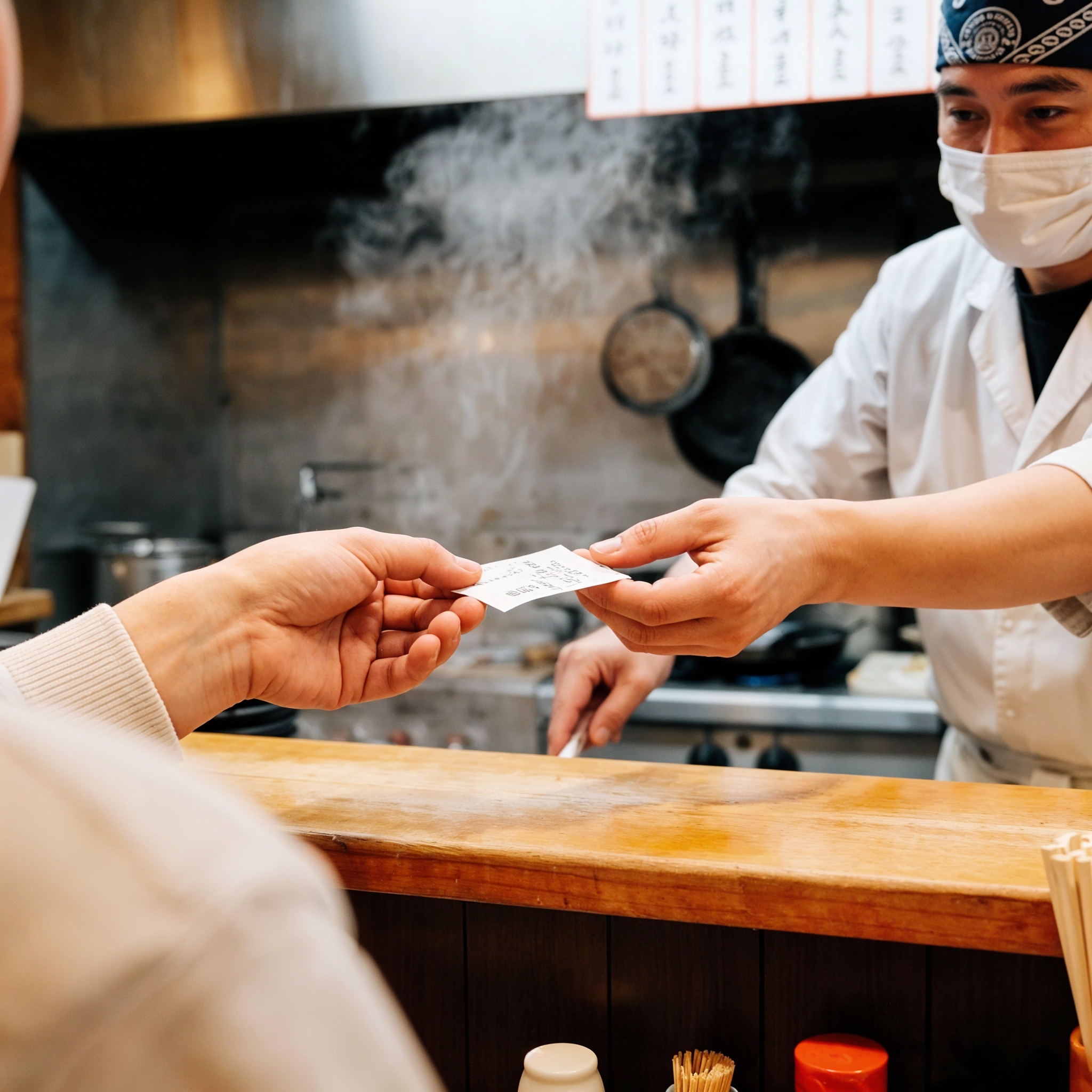
If you cannot read anything, just bet on the Top-Left button. It is the safest and most delicious gamble you can make. Once you get the small paper ticket, hand it to the chef and sit down.
Chapter 2: The Art of Slurping (Why We Do It)
Now, the bowl arrives. Steam is rising. The smell is incredible. In the West, making noise while eating soup is considered rude. In a Ramen shop, silence is the enemy. You must Slurp.
Why do we make the “Zuru-Zuru” sound? It is not just about being wild. There is science behind it.
-
Cooling Down: Ramen is served boiling hot. Slurping pulls in cool air along with the noodles, preventing you from burning your tongue.
-
Aeration (Flavor): This is exactly like wine tasting. When you sip wine, you pull in air to open up the aroma. Slurping Ramen does the same thing. It forces the aroma of the broth into your nasal passage, making the flavor explode.
So, forget your table manners for 20 minutes. Make noise. It tells the chef, “This is delicious!”
Chapter 3: Silence & Speed (The Counter Etiquette)
A Ramen shop is not a cafe. You do not stay for two hours to chat with friends or read a book. It is a place of speed.
The noodles absorb the soup very quickly. If you eat slowly, they get soft and lose their texture. So, the golden rule is: Eat fast, and leave as soon as you are done.
The “Clean Up” Ritual If you sit at the counter, watch what other customers do when they finish.
-
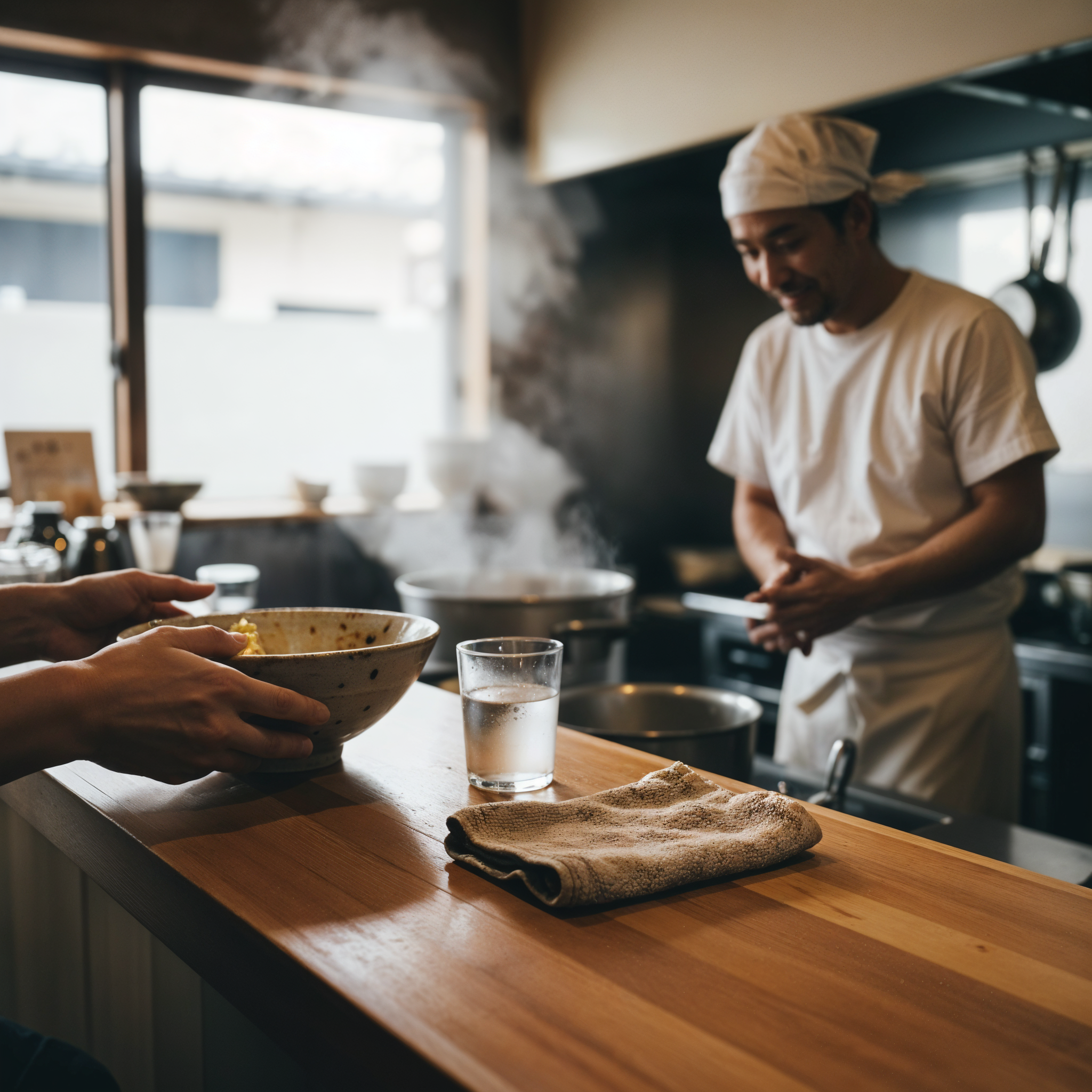
Lift the Bowl: Place your empty bowl and glass up on the high ledge in front of you. This helps the chef clean up quickly.
-
Wipe the Table: You will see a cloth (Dakin) on the counter. Use it to wipe your area clean for the next person.
-
Say Thanks: As you head to the door, shout (or say firmly) to the chefs: “Gochisosama deshita!” (It was a feast / Thank you for the meal). They will likely shout back a loud “Arigato Gozaimashita!”
Conclusion: The Reward Behind the Wall
The world of Japanese Ramen can seem intimidating. The ticket machines have no English, the chefs are loud, and the rules are strict. But do not let that stop you.
That “barrier” exists to protect the quality and the speed of the food. Once you cross it—once you buy that ticket and take your first loud slurp—you become part of the local rhythm. You will discover that a 1,000-yen bowl of soup can be deeper and more satisfying than a fancy French dinner.