More Than Just a Hotel: How to Stay at a Traditional “Ryokan” (and Wear a Yukata)
Introduction
In the West, a hotel is usually just a base camp—a place to shower and sleep after a long day of sightseeing. In Japan, the “Ryokan” (traditional inn) is the destination itself.
If you book a Ryokan, do not plan a busy day. Check in exactly at 3:00 PM. Why? Because the experience is about slowing down. It involves soaking in a hot spring, wearing comfortable robes, eating an incredible multi-course dinner, and doing absolutely nothing.
However, Ryokans have their own set of ancient rules. To avoid awkward mistakes, let me guide you through the art of Japanese hospitality (Omotenashi).
Chapter 1: The Shoe Ritual (Genkan & Slippers)
The first challenge starts at the front door. As soon as you enter the entrance area (Genkan), you must take off your shoes. The staff will whisk them away, and you will not see them again until you leave.
The Slipper Dance Here is the golden rule of Japanese indoor footwear:
-
Hallways: Wear the provided guest slippers.
-
Tatami Rooms: NO SLIPPERS. Take them off before stepping onto the straw mats. Walking on Tatami with slippers is a serious crime against culture!
-
Toilet: Switch to the special “Toilet Slippers” found inside the restroom.
-
Warning: The most common mistake tourists make is forgetting to switch back. Walking around the dining hall wearing “Toilet Slippers” is extremely embarrassing. Check your feet!
-

Chapter 2: The Room of Emptiness (Tatami & Futon)
When you are shown to your room, you might be confused. “Where is the bed? Why is the room empty?”
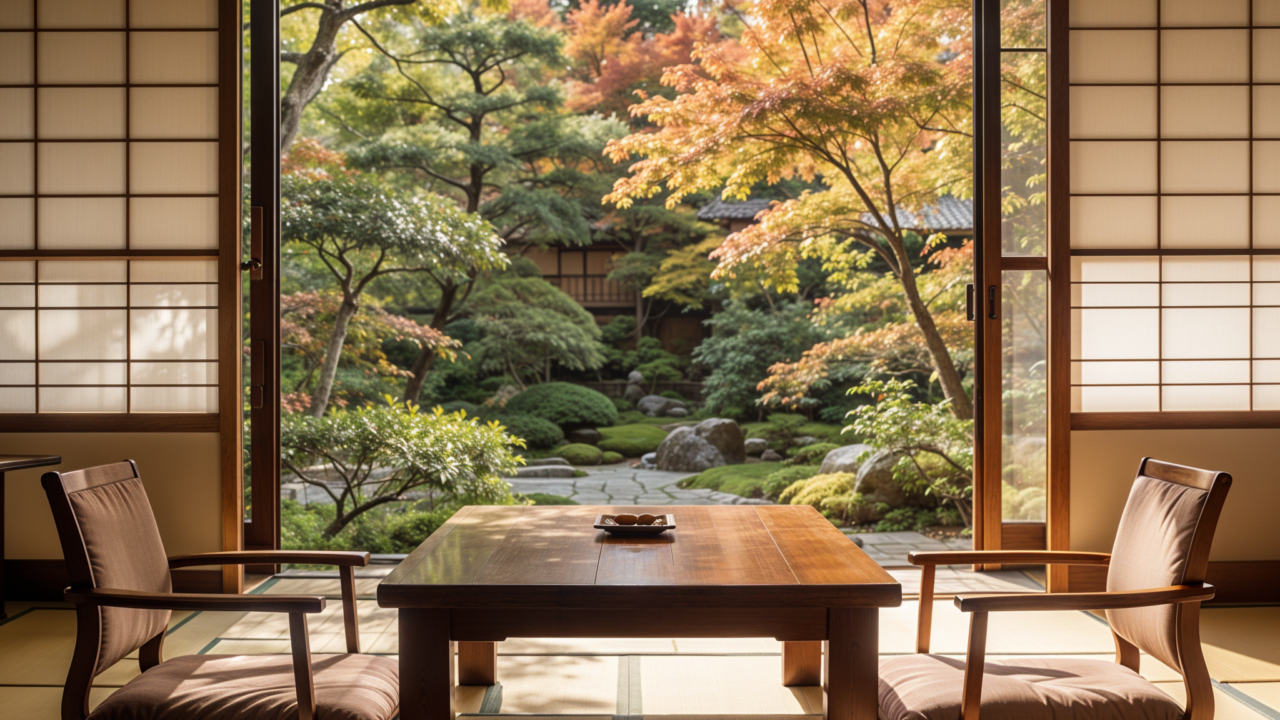
A traditional Japanese room is flexible. During the day, it is a living room with a low table and chairs (Zaisu) on the Tatami floor. The Tatami mats are made of woven straw and have a distinct, grassy scent. They are soft but delicate, which is why shoes and slippers are banned.
The Magic of the Nakai-san You will likely have a room attendant called a Nakai-san. She will welcome you with green tea and a sweet snack. Do not worry about the bed. While you are eating dinner, the staff will enter your room and magically set up thick, fluffy mattresses called “Futons” on the floor. It’s like a sleepover, but luxurious.
Chapter 3: How to Wear a Yukata (Don’t Dress Like a Corpse!)
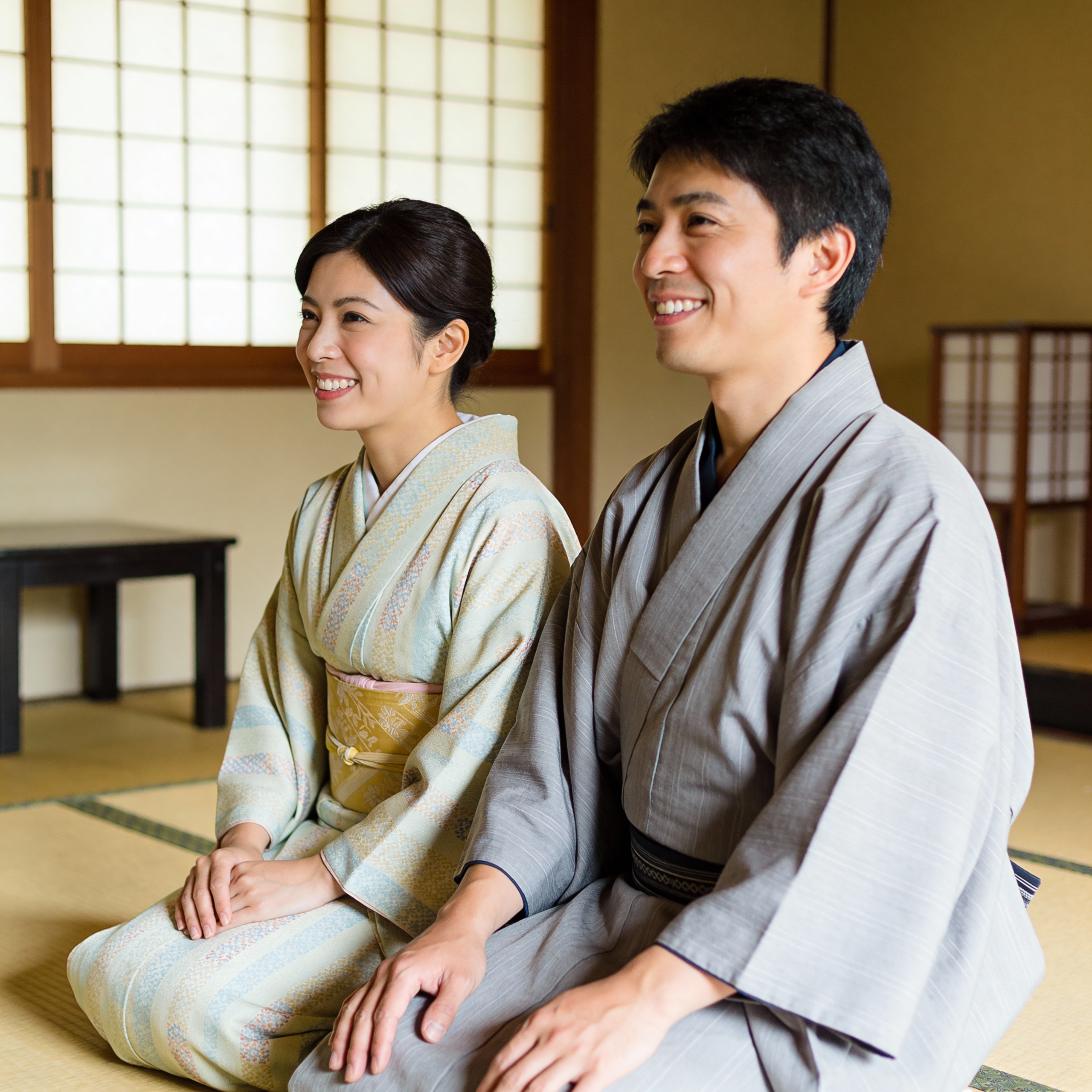
In your room, you will find a cotton robe called a “Yukata.” Think of this as the Ryokan’s relaxation uniform. You can wear it everywhere—to the bath, to dinner, and even for a stroll outside.
The Life-or-Death Rule Putting it on is simple, but there is one rule you must never break. When you wrap the fabric across your chest, the Left Side must be on Top (Left over Right).
-
Left over Right: For living people.
-
Right over Left: For the deceased (used at funerals).
If you wear it “Right over Left,” you are accidentally dressing up as a corpse. It will shock the staff! A simple way to remember: You should be able to slide your right hand easily inside the chest pocket formed by the robe.
The Belt (Obi) Tie the sash around your waist (men tie it lower on the hips, women at the waist). A simple bow tie is perfectly fine. Now, you are ready to relax.
Chapter 4: The Feast (Kaiseki Dinner)
If the room is for resting, dinner is the main event. Ryokan dinners are usually served around 6:00 PM or 7:00 PM.
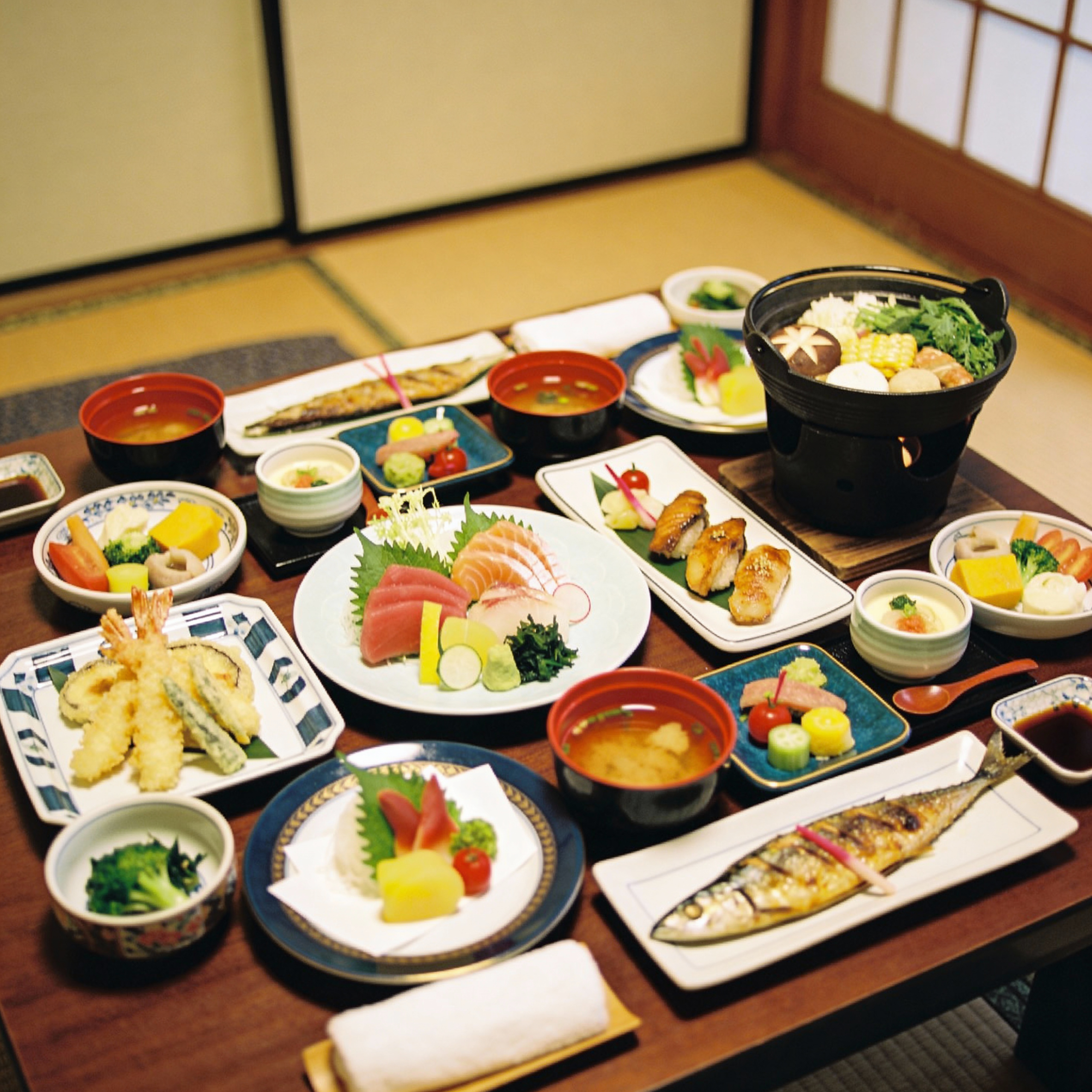
Depending on the Ryokan, you will either dine in a private dining room or enjoy the ultimate luxury: “Heyashoku” (in-room dining). Your Nakai-san will bring course after course to your room, laying out an incredible array of small dishes on the table.
Eating Art This traditional multi-course meal is called “Kaiseki.” It is not just food; it is art intended to reflect the season. If it is autumn, you might see ingredients carved into maple leaves. If it is spring, there will be cherry blossom motifs. The ingredients are local, fresh, and prepared with incredible detail.
Jay’s Tip: The amount of food is overwhelming. Pace yourself. Do not fill up on the first few dishes, because the rice and soup usually come at the very end!
Chapter 5: The Final Soak (Onsen)
After dinner, your body will be full and relaxed. This is the perfect time for a night bath.
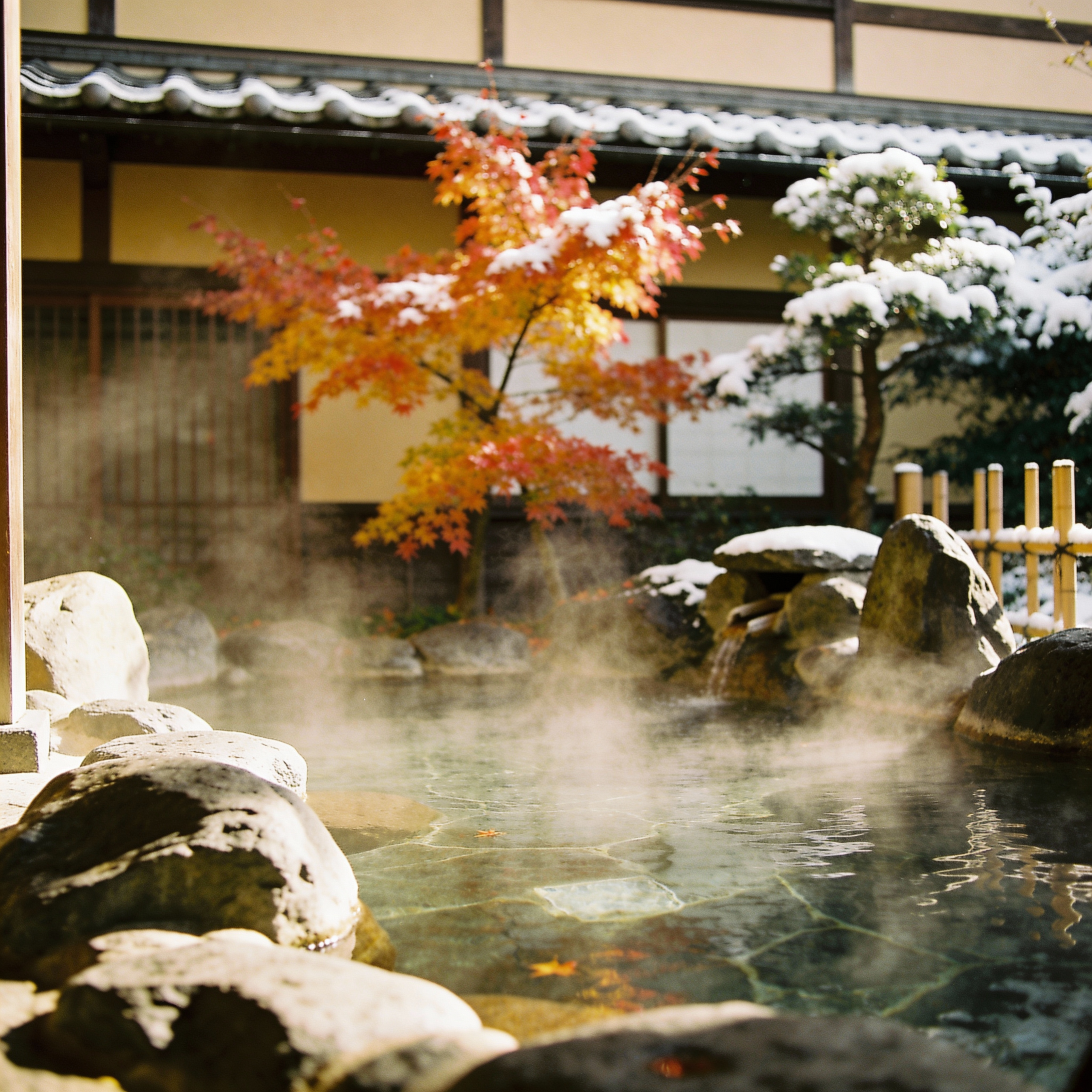
Almost all Ryokans feature communal hot spring baths (Onsen). Many high-end ones even have “Rotenburo” (open-air baths) where you can soak under the stars.
Remember the golden rule of the Japanese bath: Wash your body thoroughly OUTSIDE the tub before you get in. The bath water is for soaking only, not for cleaning.
Sinking into the hot water while wearing your Yukata afterward is the moment you truly understand the magic of the Ryokan.
Conclusion
A stay at a high-end Ryokan is not cheap. It might be the most expensive night of your entire trip. But do not think of it as just a hotel room. Think of it as a ticket to a cultural theme park.
For 24 hours, you get to live a different life. You wear different clothes, eat incredibly crafted food, and are treated with a level of hospitality (Omotenashi) that exists nowhere else in the world.
When you check out the next morning, wearing your regular clothes and putting your shoes back on will feel strange. That is the sign of a perfect Ryokan stay.