Mastering the Maze: A Survivor’s Guide to Tokyo Trains & The IC Card
Introduction
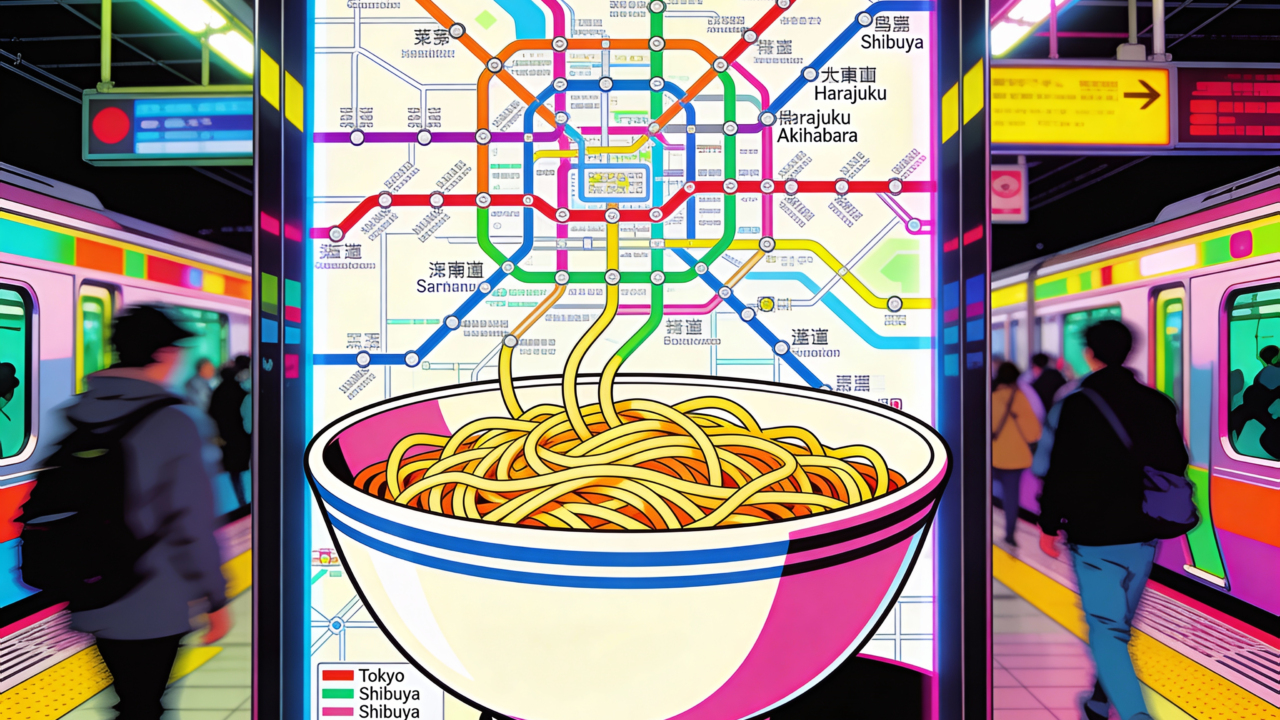
Look at a map of the Tokyo subway system for the first time, and you might feel a wave of panic. It looks like a bowl of colorful spaghetti thrown against a wall. There are over 13 distinct lines, multiple competing companies (JR vs. Metro), and stations that feel like underground cities.
You might be tempted to just take a taxi. Don’t do it. Taxis in Japan are expensive, and traffic can be slow.
The truth is, Tokyo’s train system is the most efficient, punctual, and clean transportation network in the world. Once you unlock its secrets, you can get anywhere in the city for a few hundred yen. In this guide, I will teach you how to skip the paper tickets, find your exit, and ride the rails like a local.
Chapter 1: The Magic Card (Suica & Pasmo)
First things first: Do not buy paper tickets. Standing in front of the ticket machine, looking up at the giant map to calculate your fare, is a waste of your precious vacation time.
Instead, you need an IC Card. The two most famous ones are Suica (green penguin) and Pasmo (pink robot). They are essentially prepaid rechargeable cards. You just tap them on the gate reader (Beep!), and the fare is automatically calculated. You can even use them to buy drinks at vending machines or pay at Konbinis.
Physical vs. Mobile Due to a global chip shortage, buying a regular physical Suica card has become difficult recently. But don’t worry.
-
Tourist Cards: Look for the “Welcome Suica” (Red) or “Pasmo Passport” at the airport. These are valid for 28 days and require no deposit.
-
Mobile is King: If you have an iPhone, you can add a Suica directly to your Apple Wallet (you don’t even need the physical card to start!). Just top it up with your credit card and tap your phone at the gate. It’s magic.
Chapter 2: Navigation 101 (Look for the Yellow Signs)
Getting on the train is easy. Getting out of the station is the hard part. Stations like Shinjuku or Shibuya are massive labyrinths. If you take the “West Exit” when you wanted the “East Exit,” you might end up 20 minutes away from your destination.
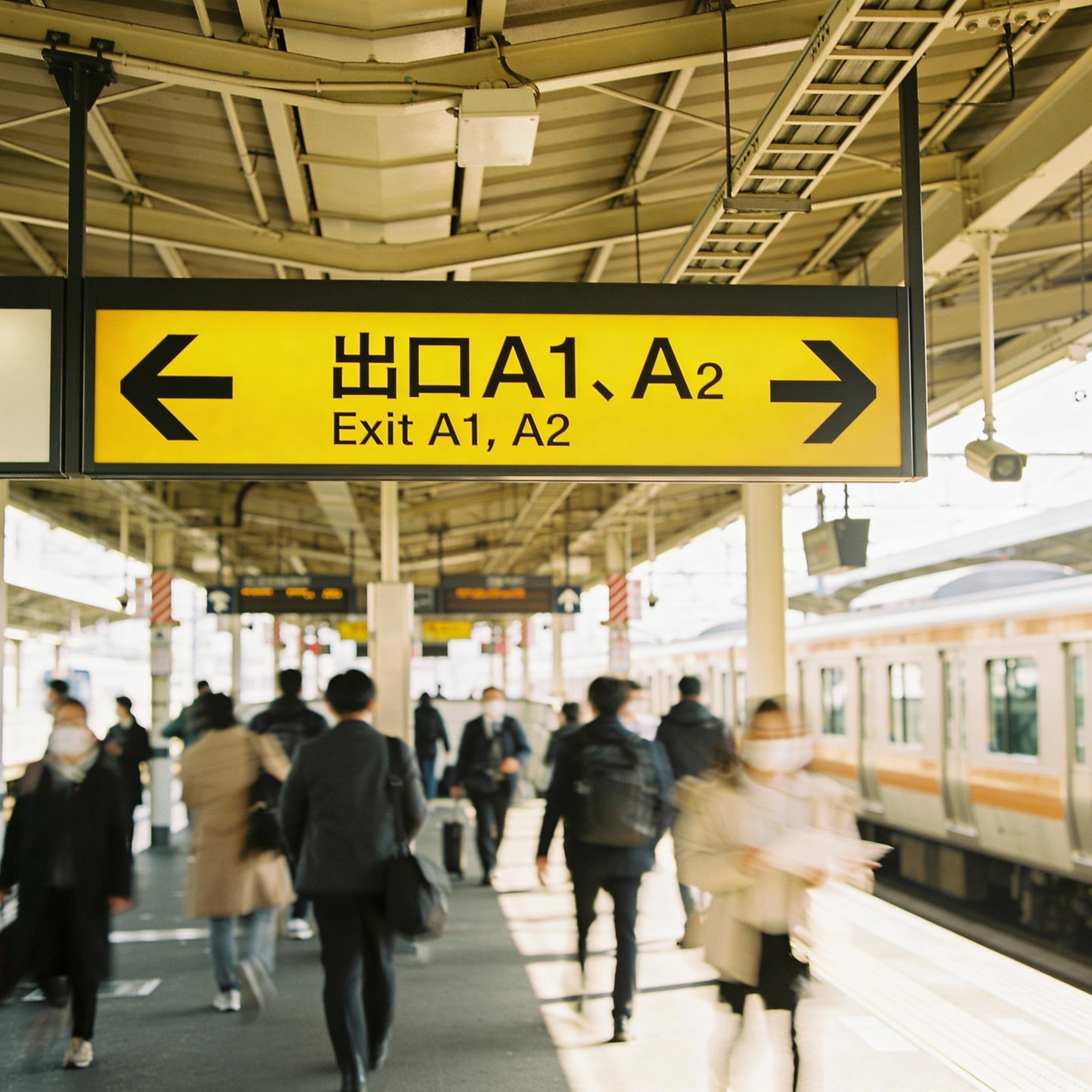
The Golden Rule: Trust the Yellow Signs Always check Google Maps before you get off the train. It will tell you exactly which exit to take (e.g., Exit B4 or Central Gate).
As soon as you step onto the platform, look up. Do not follow the crowd. Look for the Yellow Signs hanging from the ceiling. They list the exits and the connecting lines. If you get lost, don’t wander. Go to the manned gate at the end of the hall and show the station staff your destination on your phone. They are incredibly helpful.
Chapter 3: The Golden Rules of Silence (Etiquette)
You have successfully boarded the train. Now, look around. You will notice something strange: it is incredibly quiet. Even in a packed carriage, people are silent.
This is not because Japanese people are unfriendly. It is about respecting others’ personal space in a crowded environment. Here are the three main rules of train etiquette:
-
Silence Your Phone (Manner Mode): Set your phone to silent mode (called “Manner Mode” in Japan) before you get on. Never make a voice call on the train. If you absolutely must take a call, get off at the next station to talk on the platform. Texting is totally fine.
-
The “Backpack Front” Maneuver: If the train is crowded, take off your backpack and wear it on your chest. This saves space and prevents you from hitting the people behind you when you turn.
-
Priority Seats: At the ends of each carriage, you will see seats with different colored fabric and signs. These are “Priority Seats” for the elderly, pregnant women, injured people, and parents with babies. You can sit there if the train is empty, but if it starts to fill up, be ready to stand up and offer the seat.

Chapter 4: Surviving Rush Hour
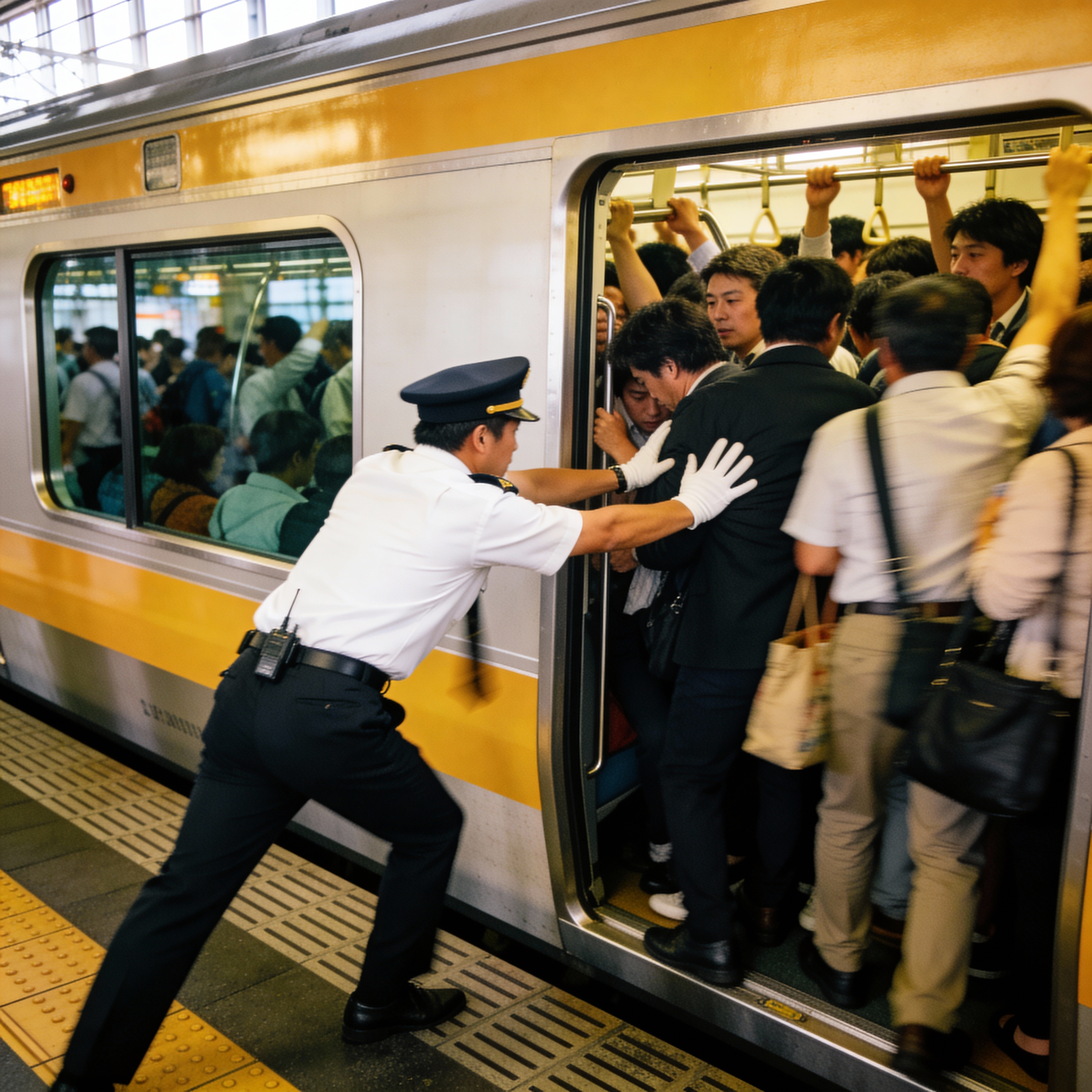
You have probably seen the viral videos of white-gloved station staff pushing passengers into trains like sardines.
Yes, it is real. Tokyo’s morning rush hour (roughly 7:30 AM to 9:00 AM) is intense, especially on major lines headed toward business districts.
The Strategy:
-
Avoid it if possible: If you are on vacation, there is no reason to endure this. Enjoy a leisurely breakfast at your hotel and head out after 9:30 AM.
-
If you MUST travel: Do not stand near the doors, or you will be crushed by the incoming tide of people. Move to the middle of the aisle.
-
Women-Only Cars: During rush hour, many lines have designated “Women-Only Cars” (usually marked with pink signs on the platform). These are safer and slightly less crowded options for female travelers.
Conclusion
The Tokyo train system is a marvel of modern engineering. It might feel overwhelmingly complex at first glance, but it is built on a foundation of logic and consideration for others.
Once you have your Suica on your phone, know how to read the yellow exit signs, and understand the quiet etiquette of the carriage, the city unlocks itself. You no longer need expensive taxis. You are free to explore every corner of this incredible metropolis like a true local.