How to Drink Like a Local: The Ultimate Guide to Japanese “Izakaya”
Introduction
If you want to see the polite, quiet side of Japan, go to a temple. But if you want to see the real Japan—loud, laughing, and full of life—you need to go to an Izakaya.
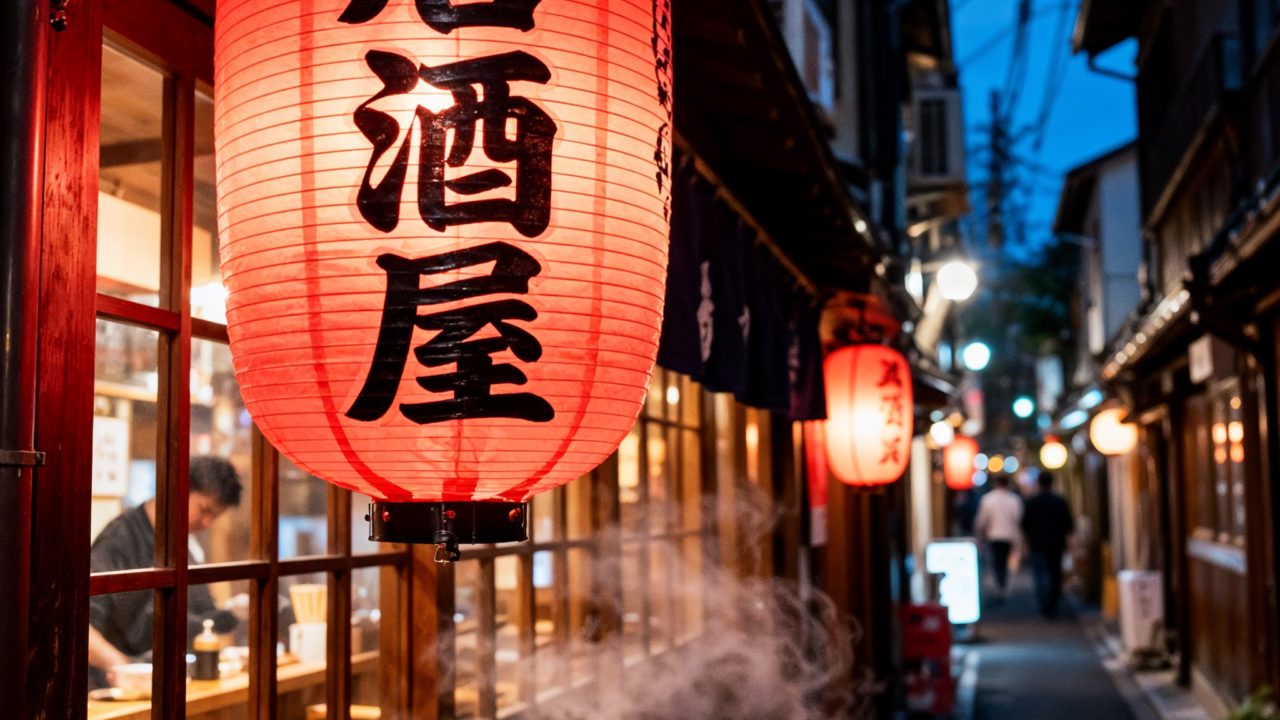
An Izakaya is often described as a “Japanese Gastropub” or a Tapas Bar, but it is so much more. Identified by red paper lanterns (Akachochin) hanging outside, these are the sanctuaries where Japanese people go to unwind after a long day of work.
Inside, the air is filled with the smell of grilled chicken (Yakitori) and the sound of clinking glasses. It can be intimidating to enter if you don’t speak the language, but don’t worry. By the end of this guide, you will be ordering, drinking, and paying like a Tokyo local.
Chapter 1: The Golden Rule: “Toriaezu Nama”
In Western restaurants, you might look at the menu for 10 minutes before ordering anything. In an Izakaya, that is a mistake. The unspoken rule of the Izakaya is: Drinks First, Food Later.
As soon as you sit down, the waiter will come to your table. Do not panic. Just say the magic phrase that 99% of Japanese people say:
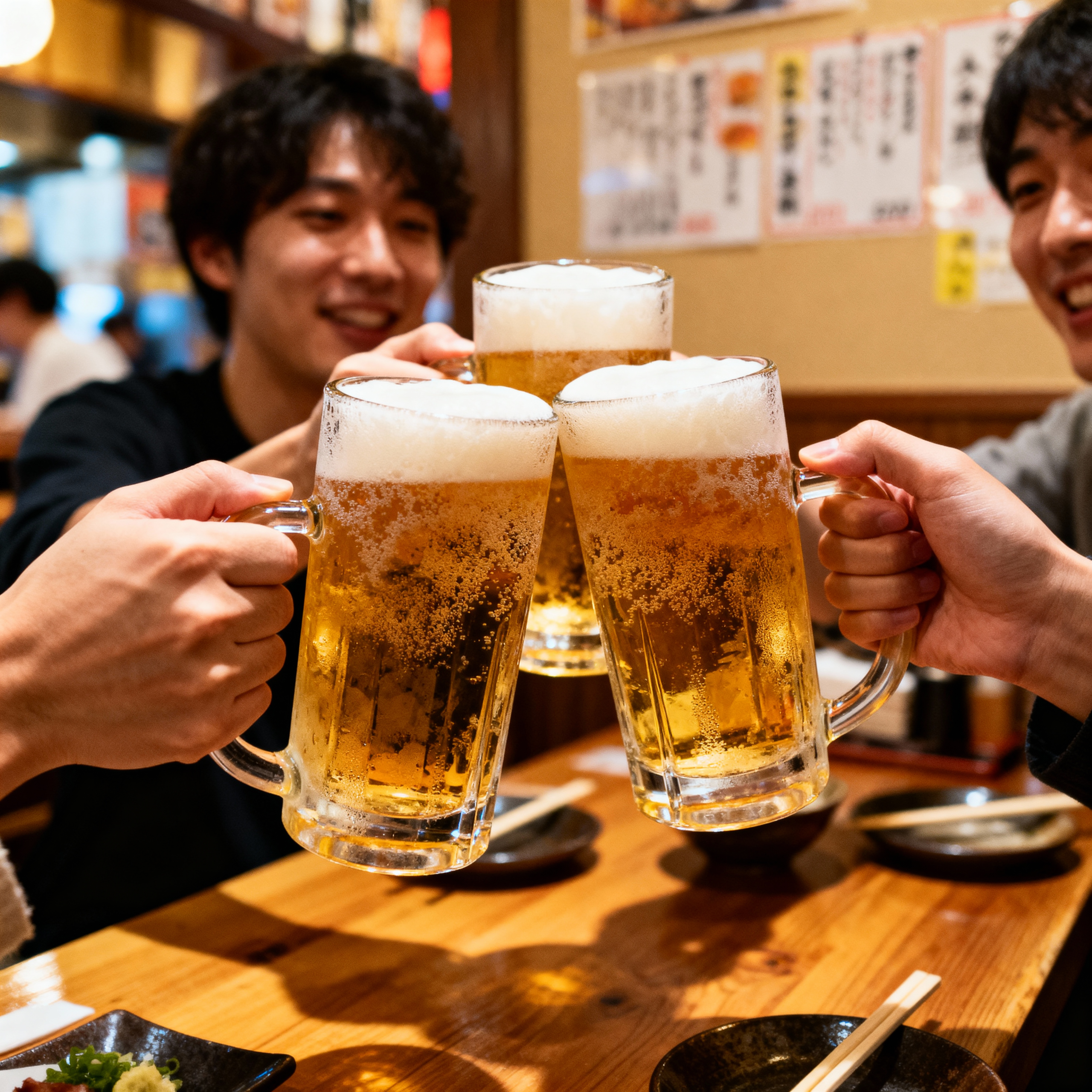
“Toriaezu Nama!” (For now, draft beer!)
-
Toriaezu: For now / To start with
-
Nama: Draft Beer (Short for Nama-biru)
Even if you want to study the food menu later, getting the drinks flowing is the priority. Once everyone has their glass, raise it high and shout “Kanpai!” (Cheers). Now, the night has officially begun.
Chapter 2: The Mystery Charge: “Otoshi”
This is the #1 thing that confuses (and sometimes angers) tourists. You sit down, order your beer, and suddenly the waiter brings a tiny bowl of food you didn’t order. Maybe it’s a small potato salad, some stewed tuna, or pickled vegetables.
You might think: “I didn’t order this! Is this free service?” No. When you get the bill later, you will see a charge of about 300 to 500 yen per person.
This is called “Otoshi” (or Tsukidashi in Kansai). Think of it as a Table Charge or Cover Charge that comes with a snack. It serves as an appetizer to munch on while your first dish is being cooked.
Can you refuse it? Generally, no. It is part of the custom sitting fee. Instead of getting frustrated, think of it as a “Mystery Box” surprise. It’s often a delicious seasonal dish that isn’t on the regular menu!

Chapter 3: Food Sharing Culture & How to Order
Unlike a Western steakhouse where you order one giant plate for yourself, an Izakaya is a team sport. The food comes on small plates designed to be shared by everyone at the table.
The Strategy: Slow and Steady Do not order everything at once! The kitchen is small, and the table space is limited. The standard Izakaya strategy is: order 2-3 dishes, eat and drink, chat for 20 minutes, and then order another 2-3 dishes. Repeat until full.
The “Sumimasen!” Shout When you are ready to order more, don’t wait for the waiter to make eye contact. In a loud, busy Izakaya, you have to be proactive. Raise your hand and shout clearly:
“Sumimasen!” (Excuse me!)
It might feel rude to shout in a restaurant, but in Japan, this is perfectly normal and expected.
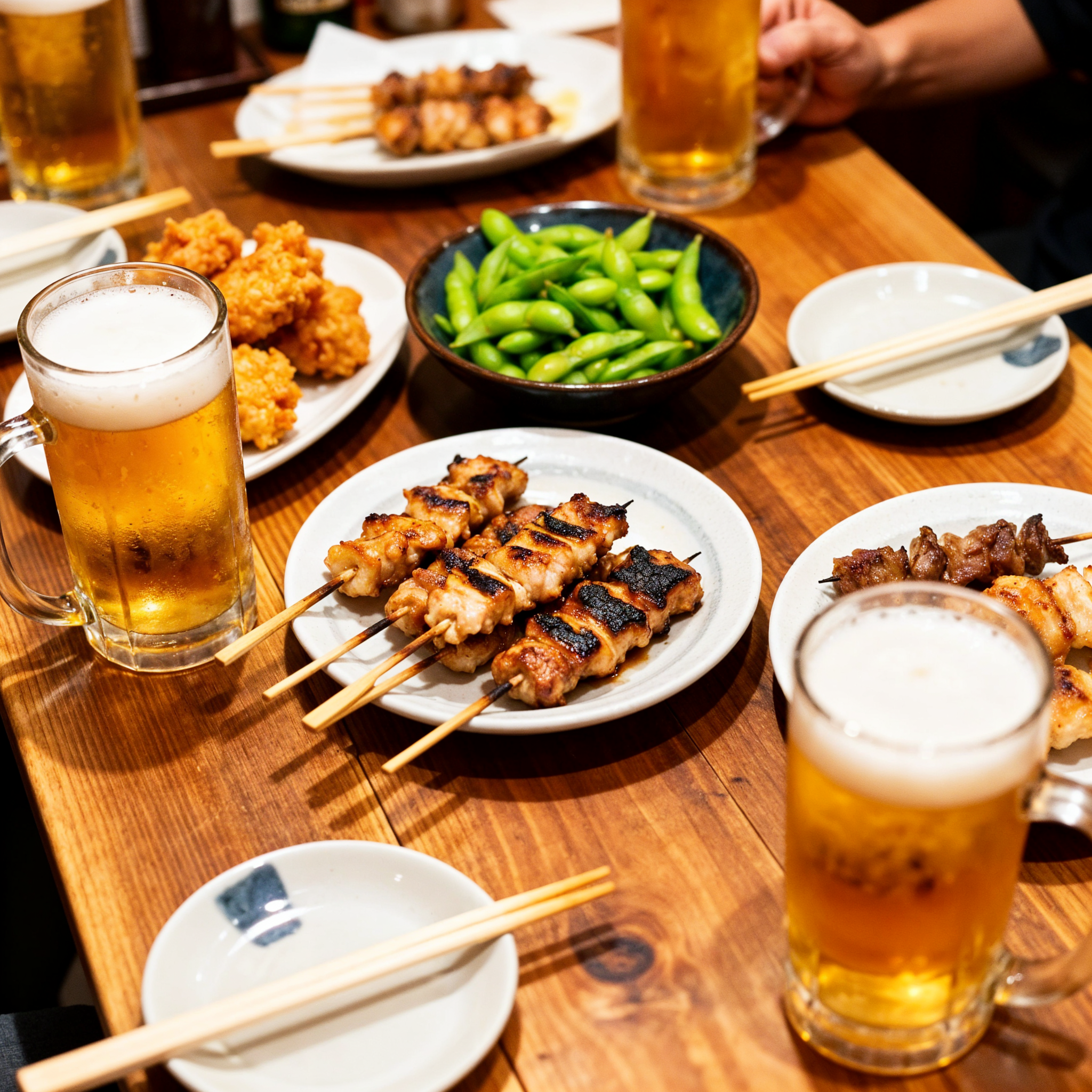
The Holy Trinity of Izakaya Food The menu might be overwhelming (and sometimes handwritten in hard-to-read Japanese calligraphy). When in doubt, start with these three classics. You cannot go wrong:
-
Edamame: Boiled salted soybeans. The perfect partner for beer.
-
Karaage: Japanese-style fried chicken. Crispy, juicy, and addictive.
-
Yakitori: Grilled chicken skewers. Try “Negima” (chicken and onion) with “Tare” (sweet sauce) for a safe and delicious start.
Chapter 4: The Check (The Magic “X” Sign)
The night is winding down. You are full of good food and perhaps a little tipsy. It’s time to pay.
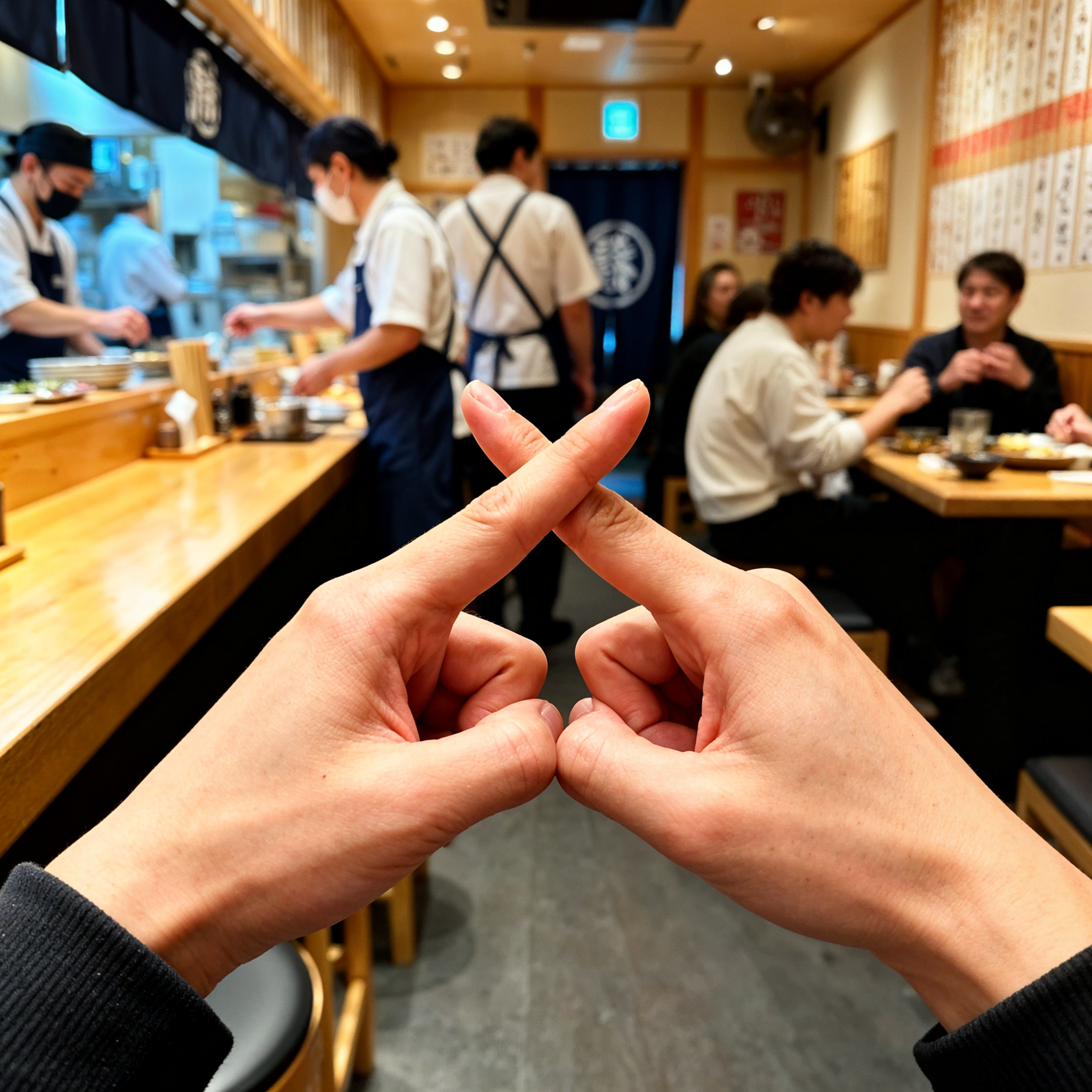
The Secret Hand Signal You don’t need to shout “Check please!” across the room. You can use a silent gesture used by Japanese salarymen everywhere. Catch the waiter’s eye, and make an “X” shape with your two index fingers.
This signal represents the Japanese character “〆” (Shime), which means “the end” or “closing.” The staff will instantly understand and bring the bill to your table.
Where to Pay & No Tipping! Usually, you do not pay at the table. Take the bill to the register near the entrance to pay.
And finally, the best news for travelers: There is NO tipping in Japan. The price is the price. If you leave extra money on the table, the staff will run after you down the street to return it, thinking you forgot your change. Save that money for your next bowl of ramen!
Conclusion
The Izakaya is the beating heart of Japanese social life. It’s loud, it’s smoky, it’s chaotic, and it’s absolutely wonderful.
Don’t be afraid of the language barrier. With a smile, a loud “Sumimasen,” and the courage to try an unknown dish, you will find that the Izakaya is the most welcoming place in the country.
So tonight, look for a red lantern, slide open the door, and shout “Toriaezu Nama!” You are about to have the best night of your trip.
What is your favorite bar food in your home country? Let me know in the comments below!